By Alexi Cashen, CEO
Fall is the planning season. The warehouses are stocked. Beaujolais Nouveau is sailing across the Atlantic. Across the industry, people are placing their Champagne bets on how the holidays will go.
This is also when I take on one of the most thought-provoking parts of my job, which is planning the year ahead. I set the vision and decide which investments to make, which vendors to rely on, who to hire and how to manage the budget. With all the uncertainty around tariffs and everything else we can’t predict, it’s hard to know where to put the guideposts. But we all have to plan, and none of us has a crystal ball.
Year after year, I watch businesses grow in different ways. Some grow dramatically by taking big swings, expanding into new markets and adding portfolios. Others grow more smoothly and gradually, in a way that protects cash flow and pays for new sales reps. Some operators are happy running a lifestyle business, with little growth and flat but reasonable results. None of these paths is wrong. What matters is choosing one on purpose.
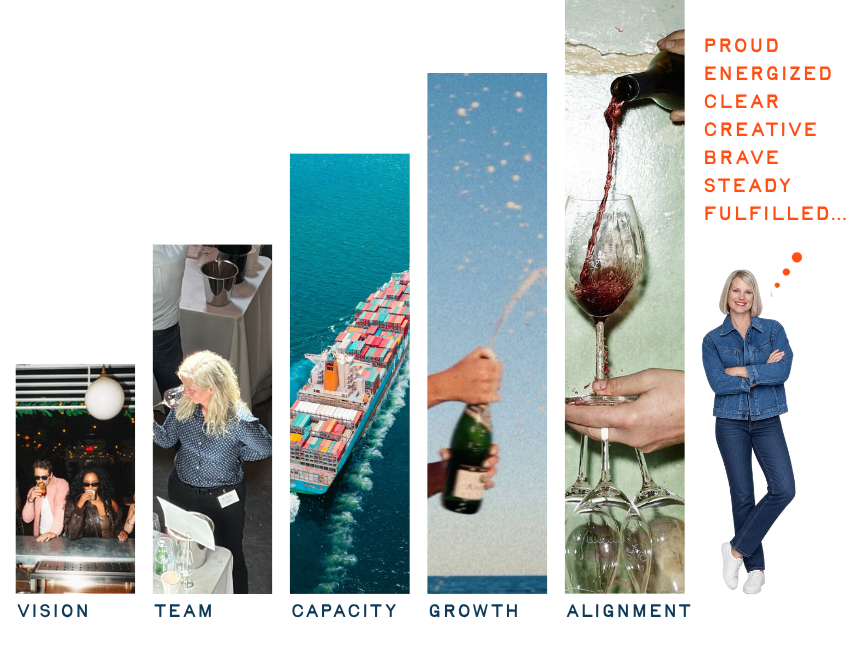
The best plans I’ve made start at the finish line.
That finish line isn’t a revenue number.
It’s a feeling: How will I feel once we’re there?
In a tough year, that feeling might not be excitement. It might be steadiness, or the grit of making a hard decision early. Getting there takes time, listening, smart tools and clear communication.
Here are the five questions I’m asking myself as I plan for 2027:
What’s the vision?
A company’s mission stays fixed, like the north star. A vision is different. I renew my company vision each year, imagining the confidence I want to feel at the end of that next cycle. I prefer visions that deepen or expand the strengths we already have. I don’t go looking for something new. Buy-in comes faster when we get to turn up the volume on where we’re already building traction. For 2027, that means doubling down on what customers already count on us for: moving your wine, Globe technology, and providing a level of service that’s fast, clear & communicative.
How’s the team?
Culture eats strategy for breakfast. Before I set goals, I look inward: how people are working together, where frustration is building, whether our priorities are clear, and trusting whether we have the right people in the right roles. The tricky part is pace. I have to slow down enough to see what’s really getting in the team’s way, then move quickly once it’s clear. If I drive the team too fast, I can miss signals about company health. If I‘m too slow in making hard decisions, the team works around those problems instead of fixing them.
What’s realistic?
My managers love building detailed project plans. They feel a sense of progress when they know they’re making everyone’s work easier, so it’s tempting to plan for more than we can actually deliver. Success doesn’t happen overnight. I set no more than five annual goals, all big-picture, and it’s my job to make sure every project ties back to one of them. We use those goals to decide what gets time and attention first. I intentionally create dopamine loops by calling out small wins along the way, so the team gets to feel that sense of accomplishment as we go—not just at the finish line. That habit becomes part of our culture and keeps everyone paddling in the same direction.
What does intentional growth look like?
Like a bottle of wine, a business keeps changing over time, and what worked before won’t always work again. I’ve had years when I planned for double-digit growth just for the sake of growth. Now I start with a different question: How will I feel once I’m there? Then I work backward. Feeling proud means we built or improved something that lasts. Feeling creative means I left room for new ideas instead of filling every hour with more of the same. Feeling accomplished means the team shares in the win. Feeling brave means I made the hard call before I was ready. The revenue goals still matter, but they’re the result. The feeling is the target. That’s not a rose-colored lens. In a year of tariffs and softer consumption, chasing 20% growth for growth’s sake can do more harm than good. Maybe the right number is 5% or 7%. Maybe the feeling you’re after is courage, or duty, or the satisfaction of being savvy when the market isn’t easy. Proud doesn’t require a record year. Sometimes it means you held steady and made the calls others put off.
How do we keep the vision alive?
How quickly can you tell whether you belong? Usually within seconds. That question shaped our 2026 theme: Belonging. It speaks to a core human need: to be noticed, to be part of something larger and to see others for who they really are. When I present my vision at an annual all-hands and then stop talking about it, it falls flat. A vision has to be stated clearly and repeated often. Inside Elysia, that meant getting clear on our personal, professional paths. Then I asked: “How will our customers react if they feel they belong with everyone at Elysia? Will they stay longer? Will they refer us to others?” For an independent importer, belonging means getting the same attention as our largest customers. That’s why we exist: to give small importers leverage in a game rigged for giants.
A plan like this takes long hours before it’s ready to share. Start with the end: feelings first, results last.
So I’m curious: what kind of growth are you planning for over the next few years, and how do you want it to feel when you get there?
Ready to put your plan into practice? Explore Less Guesswork, More Margin for three tools to help you forecast sales, plan inventory and understand what each delivery really earns.