Author: Marisa Wilairat, Chief Compliance Officer
It's no longer news that distribution ownership is shifting within our industry. What doesn't make the press release is everything underneath it: the licenses, the registrations, the fine print that decides whether your brands actually keep moving.
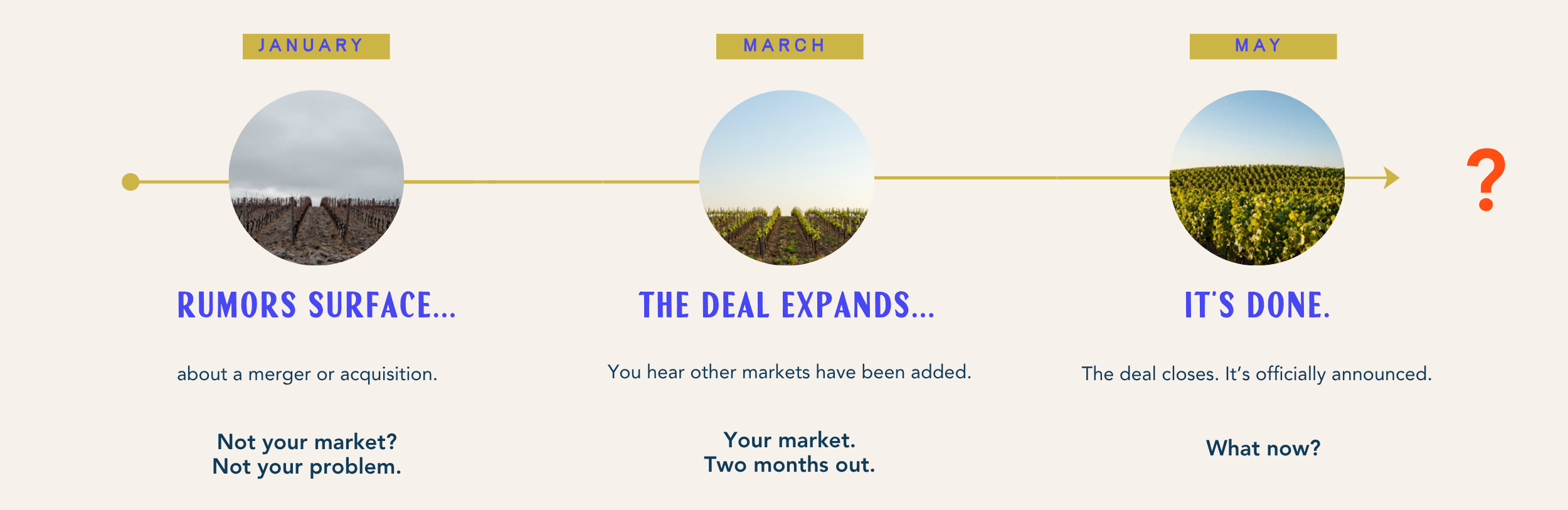
Let's say your brands survive the acquisition intact. You talking to your “old” & “new” distributor about what lies ahead, with as much uncertainty as opportunity. The portfolio fits the new owner’s book. The rep turnover doesn't sever the relationships your brands depend on.
Here's the part that catches even experienced operators off-guard: an acquisition can preserve the brands, the relationships, even the warehouses, but leave a regulatory gap that leaves the route to market unsecure.
Take Oklahoma.
At the end of May, Reyes Beverage Group (RBG) announced the closing of its acquisition of Republic National Distributing Company's (RNDC) operations across nearly a dozen markets, Oklahoma among them. RBG Spirits and Wine of Oklahoma ("Reyes") is replacing RNDC as the Oklahoma distributor. Straightforward enough, until you ask who holds the Oklahoma Nonresident Seller License (NRS), the license that lets an out-of-state seller register brands, ship products into the state, and place them with the in-state wholesaler. If RNDC was your Oklahoma distributor, you may have been selling to Best Brands of Delaware LLC, doing business as RNDC, the entity that held the NRS. You know Reyes will be your distributor, but will Reyes also be the out-of-state seller who registers your brands and ships them into Oklahoma? Does RBG hold an NRS? Do you? Do you need one? How much time do you have to figure it all out? If you miss a beat, operations may stall. Revenue that looked secure is suddenly at risk. What looked settled turns into a compliance hurdle you have to clear.
Each state runs its own version of the three-tier system, and staying in the market means staying compliant with all of it. In some states, the distributor selling your brands to retail can also be the "supplier" shipping them into that state, so a distributor acquisition doesn’t dramatically alter responsibilities. In other states, it’s more complicated.

Your product is compliant today and stranded tomorrow — not because anything changed about the brand or the supplier, but because the licensing landscape shifted, and someone else needs to step in.
Consolidation isn't going away, and neither is the regulatory complexity underneath it. Oklahoma is one state in one deal, with its own licensing rules, but similar hurdles will surface. The specifics differ state to state, and so does the exposure. The operators who stay intact are the ones who see the risks before disruption forces the issue.
If a distributor acquisition has put your route to market in question, reach out to the Elysia team at sales@elysiaships.com.